

Where Kratom Grows: The Tree’s Native Habitat
Where Does Kratom Grow in the Wild?
You have a pouch of powder labeled Red Bali, a friend swears by something called Green Malay, and a vendor’s site mentions Borneo, Sumatra, and Thailand. It is natural to wonder whether any of those names mean anything, and to ask the more basic question underneath them: where does kratom grow, and what does that origin tell you about what you are buying?
Kratom is the common name for Mitragyna speciosa, a tropical evergreen tree in the Rubiaceae family, the same botanical family as coffee. It is native to Southeast Asia, where it grows wild across a band of humid lowland forest stretching roughly from southern Myanmar and Thailand down through the Malay Peninsula and into the Indonesian archipelago, the Philippines, and New Guinea.
In its native range, kratom favors specific terrain:
- River corridors and floodplains. Wild trees are often found along riverbanks and in seasonally flooded forest, where soil stays moist and nutrient-rich.
- Low elevations. Most kratom grows in lowland areas rather than cool highlands.
- Secondary forest and forest edges. The tree does well in disturbed or partially cleared land, which is one reason it adapted easily to smallholder cultivation.
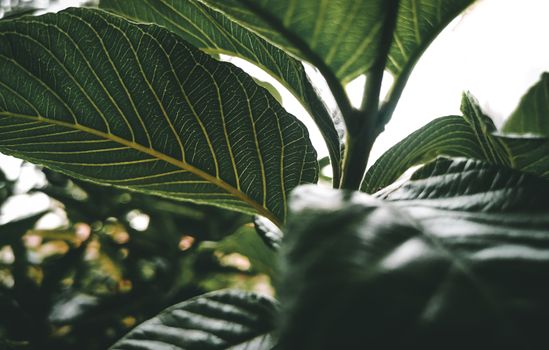
A mature kratom tree is a substantial plant. In the wild it can reach heights of roughly 15 to 25 meters or more, with a straight trunk and broad, glossy, oval leaves that may grow longer than an adult’s hand. Those leaves are the part harvested for the kratom products sold abroad.
For generations, people in rural Thailand, Malaysia, and Indonesia have chewed fresh leaves or brewed them into tea, particularly agricultural laborers. That traditional use stayed largely regional until international demand grew in the 2000s and 2010s. Today, most of the kratom sold in Western markets comes from cultivated or semi-wild trees in a handful of Indonesian provinces, a point covered in more detail below. Understanding the tree’s habitat is the first step toward making sense of strain names, quality differences, and vendor claims.
The Climate and Soil Kratom Needs
Kratom’s native range is not an accident. The tree is closely matched to equatorial conditions, and those conditions shape how the leaf develops. If you ever read a vendor description praising a farm’s location, these are the factors that actually matter.
Temperature. Kratom thrives in consistent warmth, generally in the range of about 21 to 32°C (70 to 90°F). It has little tolerance for cold. Sustained temperatures below roughly 10°C (50°F) stress the tree, and frost can kill young plants outright. This is the single biggest reason kratom cannot be grown outdoors across most of North America and Europe.
Humidity and rainfall. The tree’s home regions see heavy annual rainfall and high humidity much of the year. Kratom drinks a lot of water and does poorly in dry air, which can cause leaf drop and browning edges.
Soil. Kratom prefers deep, fertile, well-hydrated soil rich in organic matter. Riverbank and floodplain soils, refreshed by sediment, are close to ideal. Growers note that while the tree likes moisture, waterlogged ground with no drainage at all can lead to root problems in cultivated settings.
Light. Mature trees tolerate strong tropical sun, while young plants often do better with partial shade, much like their natural start beneath the forest canopy.
A few practical takeaways for buyers:
- Seasonality affects supply. Wet and dry seasons influence harvest timing, drying conditions, and sometimes availability. Drying leaf during heavy rains is harder, which can affect quality if a producer cuts corners.
- Growing conditions influence leaf chemistry. Research on kratom shows that alkaloid content, including mitragynine, varies between trees and regions. Soil, sunlight, leaf age, and genetics all likely play a role, which is one reason two batches with the same label can feel different.
- Environment is not the same as processing. Much of what distinguishes one product from another happens after harvest, during drying and grinding. A great growing region does not guarantee a well-handled product.
The Main Kratom-Growing Countries
Although kratom grows wild across much of Southeast Asia, commercial production is concentrated in a few places, and local law has shaped where the export trade developed.
Indonesia. Indonesia supplies the large majority of kratom sold internationally. The heart of production is West Kalimantan on the island of Borneo, particularly the Kapuas Hulu region along the Kapuas River, where many smallholder farmers grow kratom alongside or in place of rubber and other crops. Kratom also grows in other parts of Kalimantan and on Sumatra. Indonesian authorities have debated how to regulate the plant for years and have introduced export rules, so the trade continues to evolve.
Thailand. Kratom has deep cultural roots in southern Thailand. The country prohibited it under the Kratom Act of 1943, but in 2021 Thailand removed kratom from its narcotics list, and later legislation set rules for its domestic sale and use. Thailand’s production is largely aimed at its own market rather than export, though Thai names like Maeng Da dominate Western labels.
Malaysia. Kratom, known locally as ketum, grows widely in peninsular Malaysia, especially in northern states. However, Malaysia restricts it under its Poisons Act, so Malaysia is not a legitimate major exporter. Products labeled Malay often come from elsewhere.
Other range countries. Kratom also occurs naturally in Myanmar, Vietnam, the Philippines, and Papua New Guinea, but none of these is a significant source for the Western market.
What this means for you:
- Assume Indonesian origin unless told otherwise. Most powder on the market, regardless of its name, is Indonesian.
- Be skeptical of exotic origin claims. A product claiming to be wild-harvested Malaysian or Thai export kratom deserves a direct question about how it was legally sourced.
- Watch for supply disruptions. Indonesian policy changes, weather, and shipping costs can affect price and availability.
What Strain Names Really Tell You About Origin
Here is the part that surprises many kratom users: most strain names are trade names, not reliable geographic labels. They evolved as marketing shorthand, and while some loosely point to a place, many do not.
Common examples:
- Bali. Bali is a popular tourist island, not a meaningful kratom-growing region. Products called Bali are generally grown elsewhere in Indonesia. The name likely stuck because Bali was a historic trading and shipping point.
- Maeng Da. A Thai phrase often loosely translated as pimp grade, used to signal a strong or premium product. Today it is a style name, and most Maeng Da sold abroad is Indonesian.
- Malay. Suggests Malaysia, but given Malaysia’s restrictions, these products are usually Indonesian.
- Borneo and Kalimantan. These are among the more plausible geographic names, since Borneo genuinely is the center of production. Still, the label alone does not prove a specific farm or district.
- Sumatra. Also a real growing area, though again, the name is not a guarantee.
Vein colors, the red, green, white, and yellow labels, are not geographic either. They generally refer to leaf vein color, leaf maturity at harvest, and especially how the leaves are dried and processed. A red and a white product could come from the same group of trees.
Because names are inconsistent from vendor to vendor, a smarter approach is to judge a product by evidence rather than its label:
- Ask for third-party lab results. Look for testing that covers alkaloid content, heavy metals such as lead and arsenic, and microbial contaminants like salmonella. Kratom was linked to a multistate salmonella outbreak in 2018, which pushed testing to the forefront.
- Check that the results match a batch. A generic certificate from years ago is far less useful than one tied to the lot you are buying.
- Ask specific sourcing questions. Which country and region? Is it cultivated or wild-harvested? A transparent seller can answer.
- Look for industry standards. Some vendors participate in good manufacturing practice programs, such as the one run by the American Kratom Association.
Can Kratom Grow Outside Southeast Asia?
Once people learn where kratom grows naturally, the next question is often whether they could grow it themselves. The honest answer is: possibly, but it is demanding, slow, and not legal everywhere.
Outdoors. Outdoor growing is realistic only in genuinely tropical or near-tropical climates. In the United States, that essentially means Hawaii, the warmest parts of southern Florida, and perhaps a few protected microclimates elsewhere. Anywhere with frost or long cool, dry spells will kill or severely stunt the tree.
Indoors and in greenhouses. Some hobbyists grow kratom as a potted houseplant or in a heated greenhouse. Success depends on recreating the native habitat:
- Warmth: keep temperatures consistently in the 70s to 80s °F, with no cold drafts.
- Humidity: aim high, often with a humidifier, humidity tent, or regular misting.
- Light: provide bright, indirect sun or full-spectrum grow lights, introducing stronger light gradually.
- Water and soil: use rich, organic potting mix that holds moisture but still drains, and never let it dry out completely.
- Space: remember this is a tree. Indoors it will stay much smaller than in the wild, but it can still outgrow a room over time.
Propagation challenges. Kratom seeds lose viability quickly and germination rates are low, so most home growers start from live plants or cuttings purchased from specialty nurseries. Even then, a houseplant grown under artificial conditions may produce leaf with a different alkaloid profile than wild Southeast Asian trees.
Check the law first. Kratom is legal at the federal level in the United States, but several states, including Alabama, Arkansas, Indiana, Rhode Island, Vermont, and Wisconsin, ban it, and some cities and counties have their own restrictions. Laws change frequently, so confirm current rules for your state and locality before buying a plant or cutting. Outside the U.S., regulations vary widely by country.
For most users, growing kratom is best treated as a botanical hobby that connects you with the plant’s tropical origins, not as a practical replacement for buying a tested product.
Where to Find Quality Kratom
Looking for lab-tested kratom you can trust? ShamansGarden offers premium kratom leaf and powder across red, white, and green veins, ethically sourced and quality-checked.